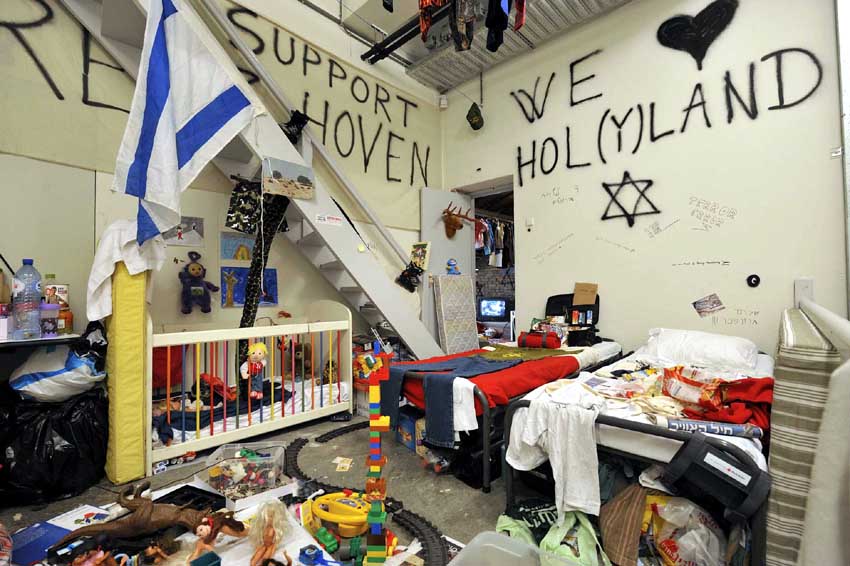
 Van Abbemuseum, Eindhoven. Photo Peter Cox.
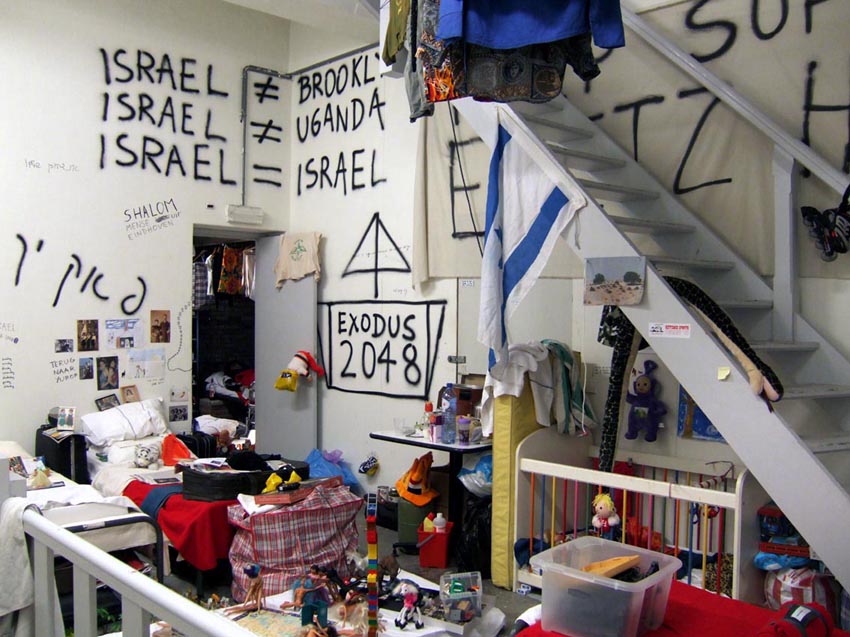 Van Abbemuseum, Eindhoven. Photo Michael Blum.
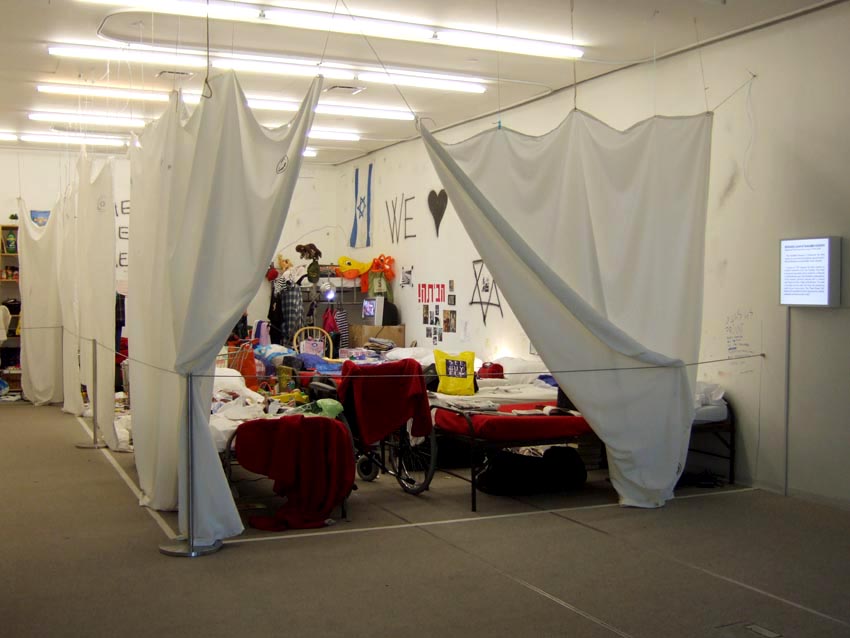 New Museum, New York. Photo Michael Blum.
- Exodus 2048
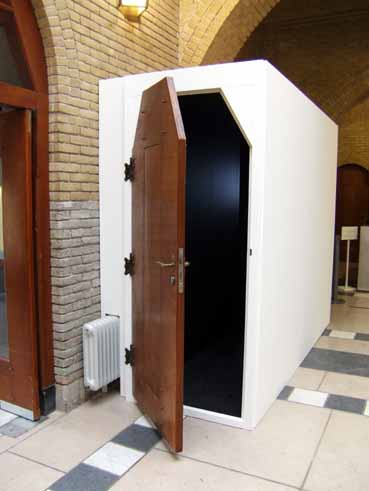
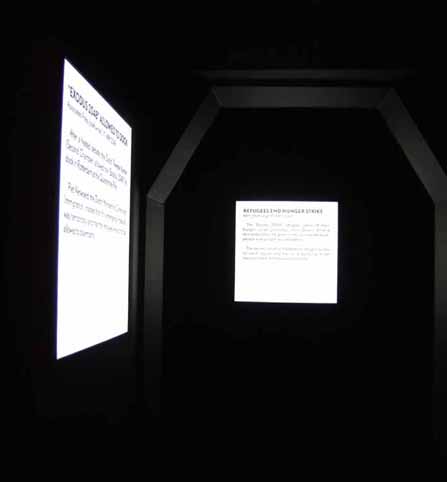
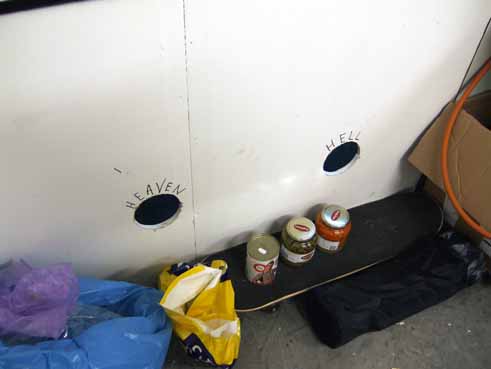
Mixed-media installation - maze, 6 texts in lightboxes 40 x 40 cm (ground floor), refugee camp (clocktower) - Produced by Van Abbemuseum for Be(com)ing Dutch, Eindhoven/NL, 2008
- Recreated at the New Museum, New York, 2009
- Presented last year at the Van Abbemuseum in Eindhoven
within the framework of the project “Be(com)ing Dutch,” Michael Blum’s
Exodus 2048, 2008, now on view as part of the New Museum’s “Museum as
Hub” program, seems particularly apt in the wake of the most recent
episode of the Israeli-Palestinian conflict. Blum has created a
fictional world in which the United States has withdrawn support for
Israel, and consequently the Palestinian population, after tripling in
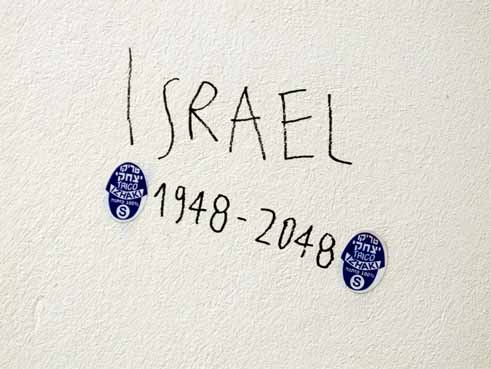
size, has forced the Israelis to evacuate. As the title of the work
suggests, this new exodus takes place in 2048, one century after the
inception of Israel. The story unfolds as forty-five hundred
expatriates are being accommodated in different public buildings in the
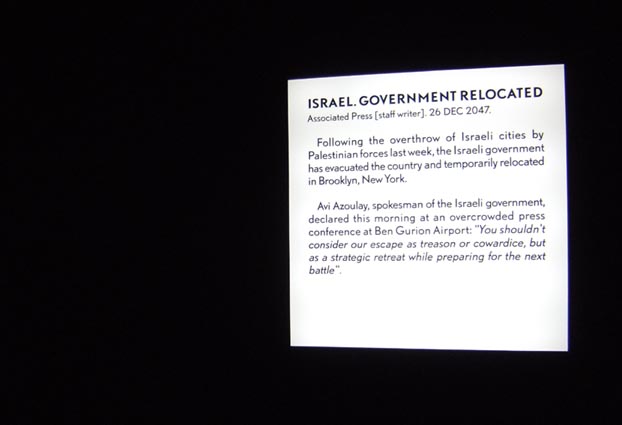
Netherlands. Blum depicts this narrative in six news-style texts on
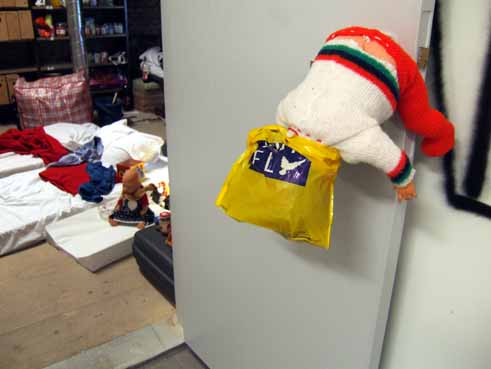
light boxes, on view alongside the reconstruction of a refugee camp.
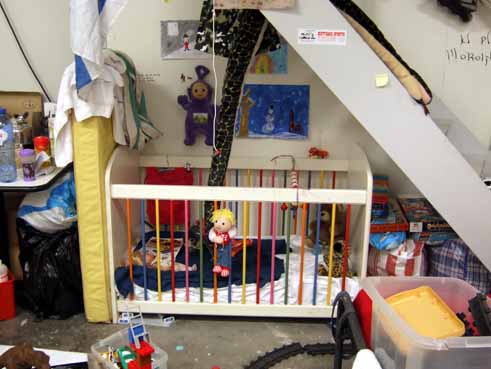
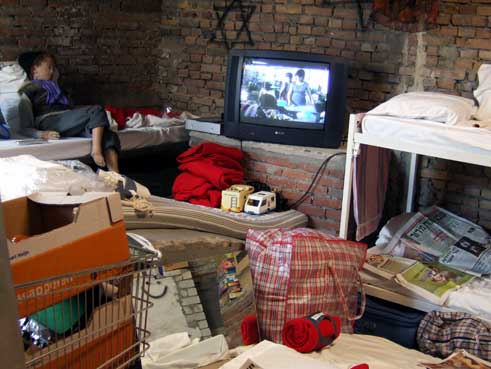
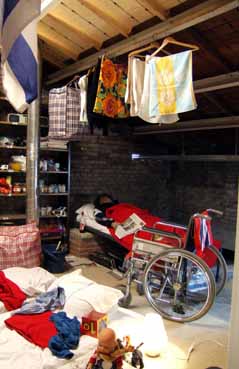
Although several suspended white curtains allow only glimpses of this
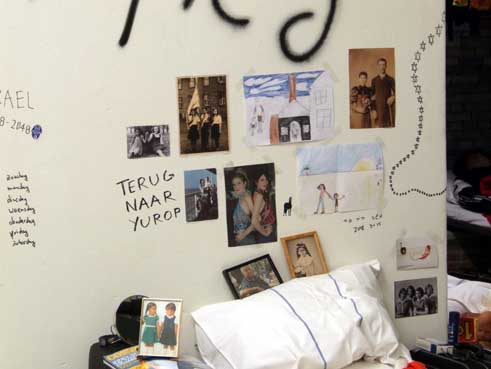
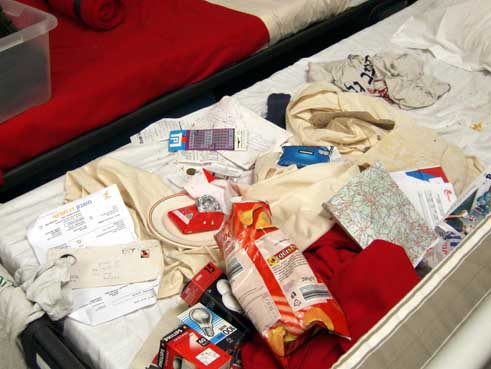
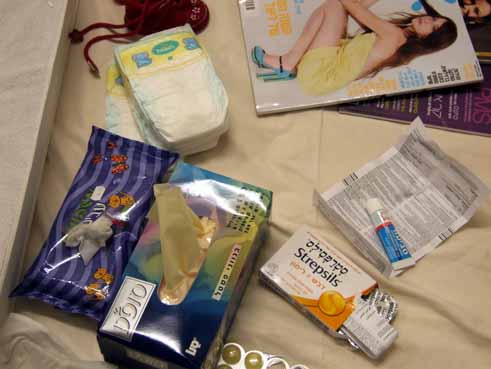
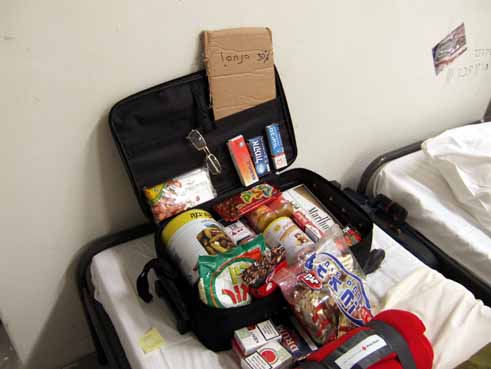
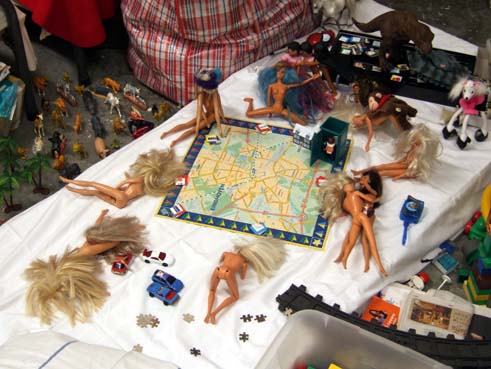
scene, one notices the arrangement of metallic beds, portable
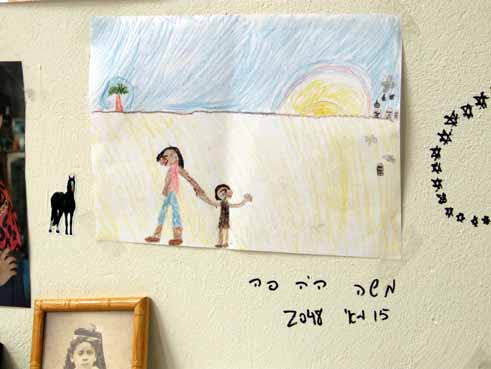
television sets, wooden shelves, packages of food, clothes, personal
photographs, toys, boxes, and other objects that recall such a chaotic
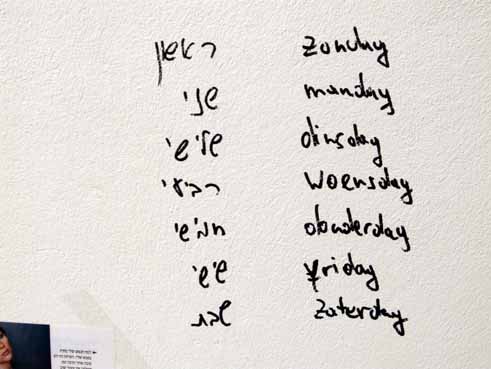
environment. On the walls, Israeli flags, spray-painted Stars of David,
and slogans draw attention to these harrowing living conditions, as
well as to Zionist mythologies. Imagining a world turned upside down by
combining complex historical references—spanning from religion to
politics—and ideological positions in an intellectually engaging
manner, Blum’s installation is both a vision of the future and a
picture of the past that emotionally captures the wounds and beliefs of
the present.
Miguel Amado, Artforum.com Critic's Picks, March 2009.
- Histories, Israeli Center for Digital Art, Holon/IL, 2013 (curated by Udi Edelman)
- Be(com)ing Dutch, Van Abbemuseum, Eindhoven/NL, 2008 (curated by Charles Esche and Annie Fletcher)
- Museum As Hub, New Museum, New York, 2009 (curated by Charles Esche and Annie Fletcher)
-
-
-
-
-